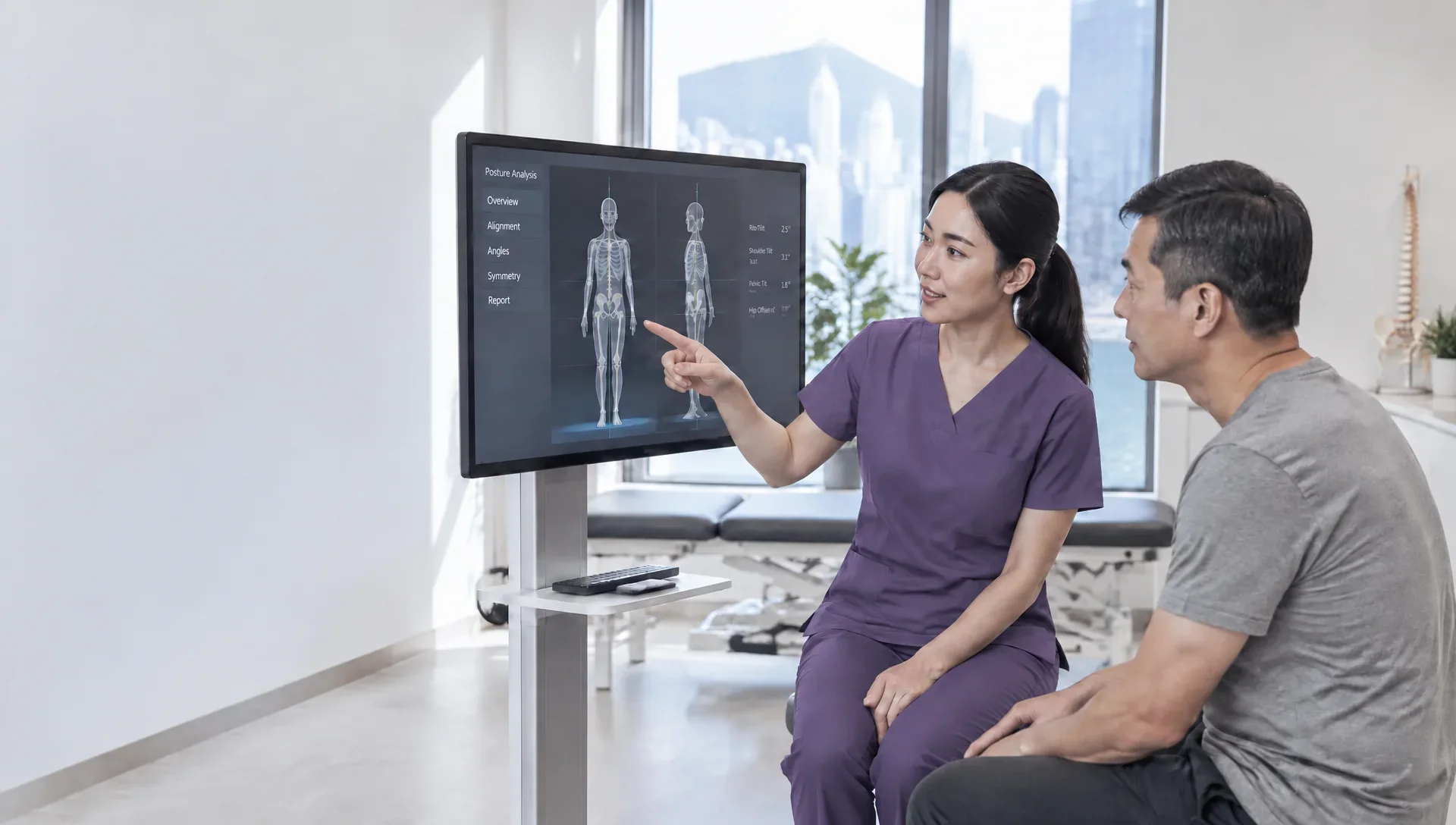
Moti Physio is a posture analyser combining artificial intelligence with a 3D depth camera. It identifies skeletal landmarks, analyses alignment and left–right balance of the head, neck, shoulders, spine, pelvis, knees and ankles, and produces a visual report — with no contact, no X-ray and no radiation. The report supports the physiotherapy assessment so you and your therapist can see posture issues together; it is not a medical diagnosis.
How it works
01
3D scan
Stand in front of the device for about 30 seconds for a contact-free 3D scan — no X-ray and no radiation.
02
Therapist explains the report
The AI system produces a posture report; a physiotherapist explains head, neck, shoulder, spine, pelvis and lower-limb alignment and left–right balance.
03
Plan treatment & training
Combined with history and physical assessment, the therapist plans treatment, stretching and strength work — and can rescan later to compare.
Common posture issues
Rounded upper back & forward head
Long hours on phones and computers push the head forward and round the upper back, often linked to neck pain and tight shoulders. The analysis shows head and shoulder position to guide thoracic mobility and scapular stability work.
Anterior pelvic tilt
Prolonged sitting can tighten hip flexors and weaken core and glutes, tilting the pelvis forward — sometimes linked to low back pain. The report shows pelvic angle to guide core and glute training.
Uneven shoulders & asymmetry
Single-strap bags, one-sided sports or old injuries can leave shoulders or hips uneven. The analysis quantifies left–right differences so progress can be tracked.
Spinal curve observation
The scan shows spinal and trunk tilt as a posture reference. Diagnosing scoliosis and measuring its angle needs a doctor and X-ray; if there is concern, we will advise you to see a doctor.
Who it's for
Ongoing neck, shoulder or back pain and want to know if posture plays a part
Office workers who sit or use computers for long hours
Active people checking left–right balance to reduce injury risk
People in rehabilitation who want to track progress with data
Older adults wanting to understand standing posture and balance
Does Moti Physio AI 3D posture analysis involve radiation?
No. The scan uses cameras and depth sensing, not X-rays, with no body contact; it takes about 30 seconds.
How is 3D posture analysis different from an X-ray?
Posture analysis assesses alignment and balance from the body surface for observation and tracking; X-rays look at bone structure and confirm diagnoses. If imaging is needed, the therapist will advise you to see a doctor.
How does the report help with pain?
The report shows where posture deviates; the therapist combines it with history and physical assessment to plan treatment, stretching and strength work. It is one assessment tool, not a diagnosis.
How often should posture analysis be done?
Usually at the first assessment, then rescanned as treatment progresses to compare changes. The therapist advises frequency individually.
Do I need a doctor's referral letter for posture analysis?
No. Posture analysis is an assessment service and can be booked without a doctor's referral letter. However, if physiotherapy treatment follows the analysis, the treatment itself requires a doctor's referral letter, so please prepare one in advance.