
Specialist Therapies
Registered physiotherapists find the root cause first, then tailor your plan — pain, elderly rehab or sports injury, at our Tsim Sha Tsui clinic or at home across all 18 districts.

01
Physiotherapy
Struggling with neck, back or sciatic pain? Registered physiotherapists find the source first, then combine manual therapy, acupuncture, dry needling and electrotherapy to get you back to work and life.
Pain assessment & manual therapy
- Pain ManagementAssessment of neck, shoulder, lower-back, sciatic and joint pain, with a plan tailored to its causes and movement limitations.
- Manual TherapySkilled joint and soft-tissue mobilisation to restore movement.
Acupuncture & dry needling
- AcupunctureAcupuncture by registered physiotherapists to relieve pain and aid recovery.
- Dry NeedlingFine needles release tight trigger points in muscle — considered for neck and shoulder stiffness, back pain and overuse after assessment.
Equipment-based therapy
- TENS TherapyTranscutaneous electrical nerve stimulation: low-current electrode pads to help ease discomfort during treatment — an adjunct that does not replace movement and strengthening work.
- IFT Interferential TherapyInterferential current for deep pain relief and circulation.
- Ultrasound TherapyUltrasound to speed soft-tissue healing and reduce inflammation.
- High Intensity Laser TherapyHigh-intensity laser applied to the painful area as an adjunct for pain and soft-tissue recovery, paired with exercise after assessment.
- SIS Focused Electromagnetic TherapyFocused electromagnetic energy for deeper soft tissue — considered for chronic tendon, plantar and joint discomfort after assessment.
- Leg Compression TherapySequential air-pressure sleeves promote lower-limb blood and lymph circulation — often used for leg swelling, tightness and post-exercise recovery as an adjunct.
- Sonic Whole Body Vibration TherapyA sonic vibration platform triggers reflexive muscle contractions, paired with strength, balance and posture training after assessment.
- Radiofrequency TherapyRadiofrequency energy gently heats deeper tissue at the target area to promote circulation and release deep soft-tissue tightness — an adjunct often considered for chronic pain and muscle tightness.
02
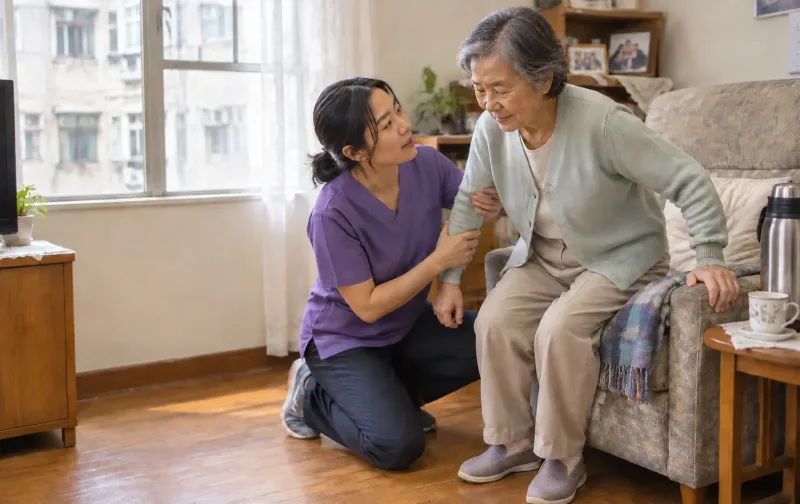
Elderly Physiotherapy
Helping elders regain confidence to stand, walk and self-care: lower-back pain, knee pain, frozen shoulder, fall prevention, sarcopenia, stroke and knee-replacement rehab at our TST clinic or at home across all 18 districts, with HCVS and CCSV worth considering.
- Home PhysiotherapyTherapists visit elders at home for strength, balance and walking training.
- Lower Back Pain in Older AdultsAssessment of back pain causes and limits, led by graded exercise, posture and activity habits, with manual and equipment care as adjuncts.
- Knee Pain & OsteoarthritisKnee pain when walking, on stairs or rising from a chair: exercise-led care with strength, balance and functional training.
- Frozen Shoulder (Adhesive Capsulitis)Combing hair or doing up a bra strap getting harder? Stage-based care for pain and stiffness to rebuild shoulder movement.
- Stroke RehabilitationIndividual strength, balance, walking and daily-activity training once medically stable and cleared by the care team.
- Post Knee Replacement RehabProgressive rehab after knee replacement to restore mobility.
- Elderly Fracture RehabPost-fracture rehab to rebuild strength, confidence and prevent re-injury.
- Sarcopenia Exercise TherapyResistance training against muscle loss to keep elders independent.
- Fall Prevention TrainingFall-risk assessment with balance and gait training.

03
Sports Relief & Rehab
Sprain, strain or runner’s knee? From injury assessment and recovery care to sport-specific training, a plan built around your sport to get you safely back on the court or track.
- Sports Injury RehabStrength, balance and sport-specific training for a graded return, with postoperative rehabilitation aligned with your doctor's guidance.
- Common Sports InjuriesAssessment of ankle sprains, muscle strains, running-related knee pain and tendon overload to guide suitable rehabilitation.
- Sports ReliefPost-exercise muscle relief and recovery to boost performance.

04
Other Services
Rehab beyond the clinic: on-site team physiotherapy and health talks for elderly centres and companies.
Booking & enquiry
The right rehabilitation plan for you
Fill in the form and our care specialist will contact you within 24 hours to understand your needs and arrange the right clinic or home-visit service.
Frequently asked questions
What techniques does physiotherapy include?
Our physiotherapy covers pain treatment, acupuncture, dry needling, manual therapy, IFT interference-current therapy, therapeutic ultrasound, high-intensity laser therapy, SIS focused electromagnetic wave therapy, transcutaneous electrical nerve stimulation (TENS), leg compression therapy, sonic whole body vibration and radiofrequency therapy; the physiotherapist combines the most suitable options based on your assessment.
How long is each treatment session?
Session length depends on the first assessment, your condition and the treatments required; when booking, ask the centre for the expected time and fees for that assessment and treatment.
Do I need a doctor's referral letter to book physiotherapy?
Yes. We only provide treatment with a referral letter issued by a doctor — please prepare it before booking and bring it to your first assessment. If you are making an insurance claim, the referral letter also helps with processing it.
Is physiotherapy suitable for neck pain, back pain or sciatica?
A physiotherapist assesses the painful area, your mobility and any nerve-related symptoms before deciding whether treatment is appropriate. If you develop new or worsening limb weakness, numbness around the saddle area, or loss of bladder or bowel control, seek medical attention promptly rather than waiting for physiotherapy alone.
Is acupuncture safe, and what should I tell the physiotherapist first?
Acupuncture is not suitable for everyone: temporary aching, slight bleeding or bruising can occur, and there are rare but more serious risks. Before treatment, tell your physiotherapist if you are pregnant, taking anticoagulants, have a bleeding disorder, or have an infection at the needling site; they will assess suitability first and explain the risks and other options.
What is the difference between acupuncture and dry needling?
Both use fine needles, but their foundations and application differ. Acupuncture comes from traditional Chinese medicine and treats according to acupoints, with needles usually retained longer and a broader range of use. Dry needling follows modern anatomy, targeting 'trigger points' inside muscles to release tightness and improve range of motion, and is often used for neck and shoulder stiffness, back pain and sports strain. The physiotherapist decides which to use — or both — based on your assessment; ask when booking which suits your situation.
When can rehabilitation start after a stroke?
Once your condition is stable and the medical team confirms you are ready, a personalised rehabilitation assessment can begin. The first 3 to 6 months after a stroke are usually the golden recovery period, when function returns fastest, so targeted training during this time is more helpful; intensity and pace are adjusted to the stroke, your stamina and any other conditions, and continued training afterwards can still bring progress. After discharge, ask us about clinic or home rehabilitation arrangements.
How soon can I return to sport after a sports injury?
There is no fixed number of weeks that applies to everyone. The physiotherapist considers the injured tissue, pain and swelling, range of motion, strength, balance and sport-specific movement, then builds a gradual return-to-sport plan; after surgery you must also follow the treating doctor's restrictions, and pain simply going away is not the standard for returning to sport.
If an elder has difficulty moving, can home physiotherapy and subsidies be arranged?
You can enquire about home physiotherapy across all 18 districts of Hong Kong. Eligibility and the scope of the Healthcare Voucher Scheme (HCVS) and the Community Care Service Voucher (CCSV) differ, and we can help with enquiries and application arrangements; before booking, please confirm your personal eligibility, the services covered and the documents required — see the subsidies page or contact the centre for details.